Are the Capitoline Museums really the oldest museum in the world?
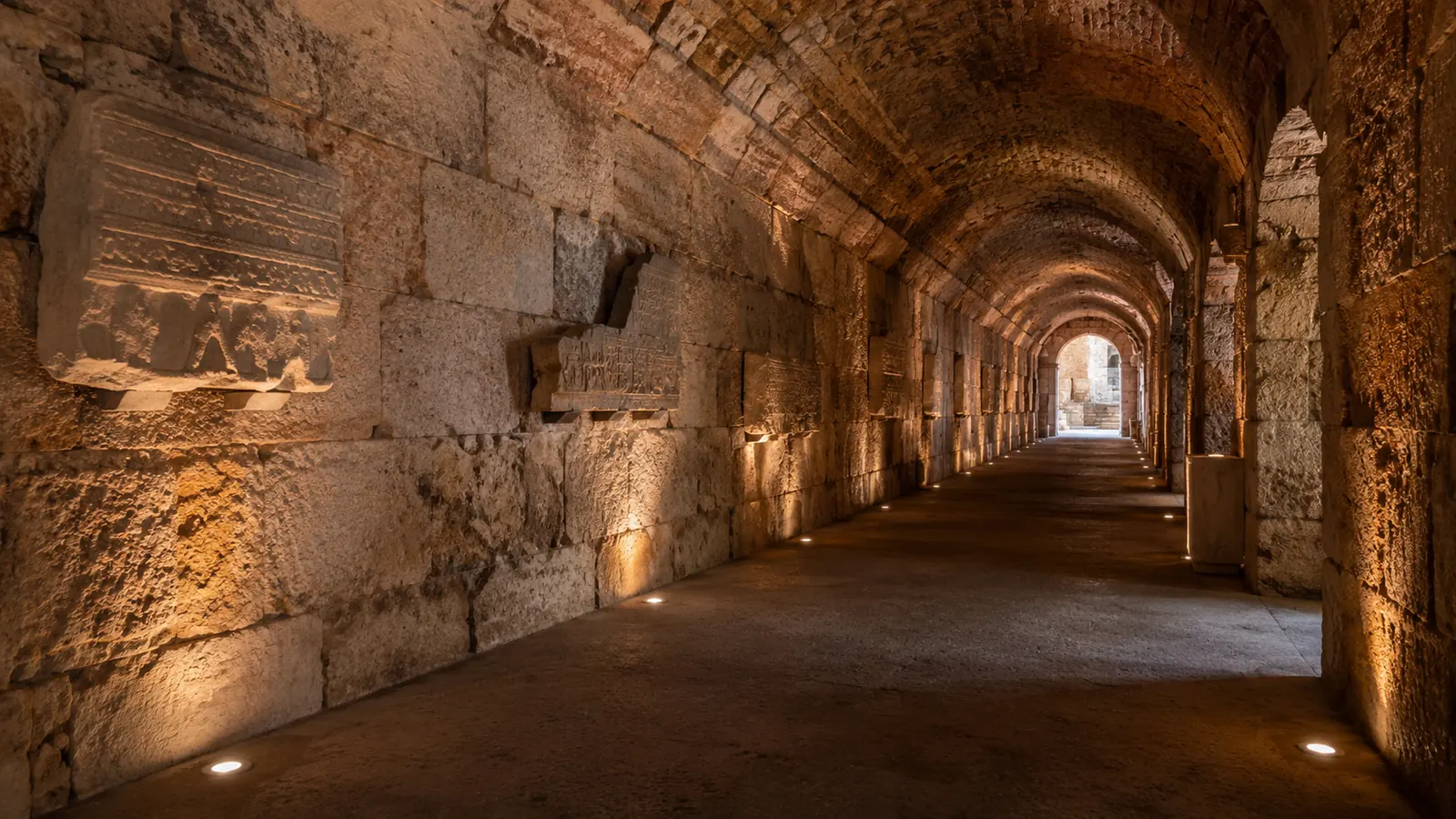
The museum says so, and the claim is defensible — as long as you know which date it rests on. The collection was founded in 1471, when Sixtus IV gave a group of ancient bronzes back to the people of Rome. It did not open to the public until 1734, under Clement XII. Whether that makes it the oldest public museum in the world depends entirely on whether you count the founding or the opening, and on what you are prepared to call a museum — which is why the title is contested rather than settled.
Know which one you want? The live dates and the operator’s own price are one tap away.
Check dates & availability →1471: the donation
In 1471 Pope Sixtus IV transferred a group of ancient bronzes that had been held at the Lateran to the Capitoline Hill, and gave them to the Roman people. The museum calls those bronzes the first nucleus of the Musei Capitolini, and they are still here, which is the part that makes this more than a legal formality. The donation comprised:
- The Lupa Capitolina, the She-Wolf — now in the Sala della Lupa, and the subject of a dating argument set out on what to see.
- The Spinario, the boy pulling a thorn from his foot.
- The Camillo, a young attendant figure, also called la Zingara.
- The colossal bronze head of Constantine, with the bronze hand and globe.
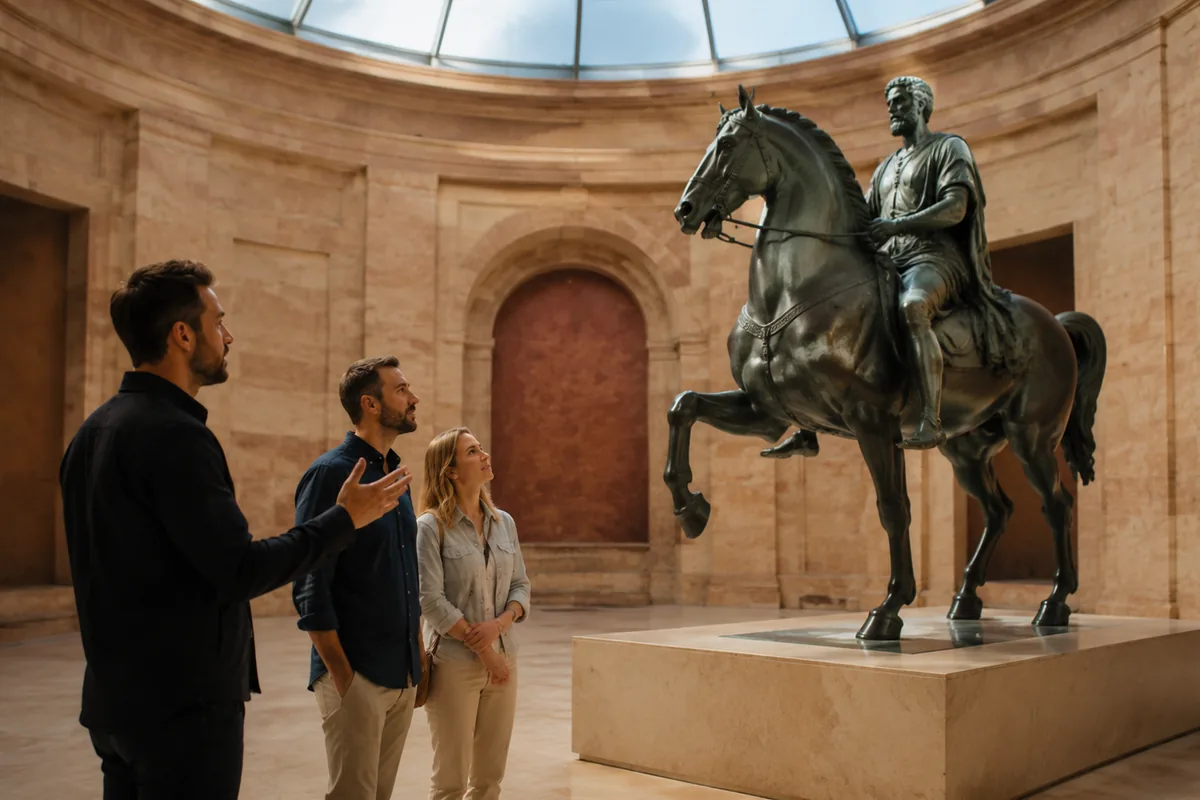
The museum is explicit about what the gesture meant: objects of Rome’s ancient greatness were being returned to the Capitoline, the religious and civic centre of the ancient city, after centuries of neglect. It was a political act as much as a cultural one, and the collection grew from there — the gilded Hercules from the Forum Boarium, the Constantine acrolith fragments from the Basilica of Maxentius, the Capitoline Brutus in 1564, thirty statues given by Pius V in 1566, Marforio moved up from the Forum in 1594. The equestrian Marcus Aurelius arrived from the Lateran in 1538 on the orders of Paul III.
1734: the opening
For more than two hundred and fifty years this was a collection, not a museum you could walk into. Palazzo Nuovo went up across the square from the mid-17th century, allowing the accumulated works to be arranged properly, but the doors stayed shut to the public. What changed was money and a purchase: Clement XII acquired Cardinal Albani’s collection of statues and portraits in 1733, and inaugurated the museum to the public in 1734. Most of the sixty-seven busts in the Sala degli Imperatori came in with that purchase.
There is a physical record of the moment, and it is worth two minutes of your visit. In the courtyard of Palazzo Nuovo an inscription commemorates the founding of the museum in 1734 under Clement XII, with the pope’s portrait above it, framed by two Hellenistic satyr statues from the Della Valle collection that once decorated the Theatre of Pompey. Most people walk past it on the way to Marforio. It is the building’s birth certificate.
So what does “oldest public museum” actually mean?
Three different claims hide inside that phrase, and they give different winners.
- Oldest collection assembled for public benefit. On this reading 1471 is the date, the donation to the Roman people is the founding act, and the Capitoline wins comfortably.
- Oldest museum open to the general public. On this reading 1734 is the date, and the field is more crowded, because the 18th century is when a great many collections opened their doors.
- Oldest place where the public could go and look at ancient sculpture. This is where the Vatican enters. The Vatican Museums date their origin to 1506, when Julius II bought the Laocoön — and that statue was put on public display at the Vatican exactly one month after its discovery, on 14 February 1506. Later than 1471, earlier than 1734.
That is the whole argument, and it is why careful writers say “often described as” rather than stating it flat. The museum makes the claim on its own site; Turismo Roma and the civic museum network repeat it. I am comfortable repeating it too, with the two dates attached, because the two dates are what make it meaningful. The broader comparison of the two institutions is on Capitoline or Vatican.
If the history is the reason you are coming, the museum runs its own themed itinerary through the great bronzes — the She-Wolf, the Brutus, the Camillo, the Spinario, the Marcus Aurelius, the gilded Hercules and the Constantine fragments. Walk those seven in order and you have walked the museum’s own foundation story. Ninety minutes is enough for it.
What happened in between, briefly
Benedict XIV founded the Pinacoteca Capitolina in the mid-18th century, absorbing the Sacchetti and Pio collections, with over 180 paintings bought from the Sacchetti family in 1748. In 1797, under the Treaty of Tolentino, works were carried off to Paris — the Dying Gaul’s own museum record notes it as being in France from 1797, returning after Napoleon’s fall, though the sources give 1815 and 1816 and disagree with each other. Administration passed to the Roman city authorities in 1838, which is when the museum became civic in the sense it still is. The Grande Campidoglio project, completed in 2005, connected the Tabularium to the rest of the complex and gave the Marcus Aurelius its glazed hall — the layout that results is described on the buildings page.
Does any of it change the visit?
Yes, in one way. Knowing that the four bronzes of 1471 are still in the building turns a room of objects into a sequence with a beginning. You are not looking at a collection assembled by purchase and taste in the way most European museums were. You are looking at what a pope handed back to a city, plus five and a half centuries of accumulation on top of it. That is a better story than “oldest museum”, and it is true regardless of who wins the title. If you want the argument for going at all, it is on is it worth it.
 Art historian
Rome: Capitoline Museums Timeless Private Guided Tour
 Top rated
Rome: Private Capitoline Museums Tour
Frequently asked questions
Is the Capitoline Museum the oldest museum in the world?
It is routinely described as the oldest public museum in the world, by the museum itself, by Turismo Roma and by Rome’s civic museum network. The claim rests on the 1471 donation by Sixtus IV; the doors opened to the public in 1734. Which date you use decides whether the claim holds.
What did Sixtus IV donate in 1471?
A group of ancient bronzes previously held at the Lateran: the Capitoline She-Wolf, the Spinario, the Camillo, and the colossal bronze head of Constantine with its hand and globe. All four are still in the museum — see what to see.
When did the museum open to the public?
In 1734, under Clement XII, after he acquired Cardinal Albani’s collection of statues and portraits in 1733. An inscription in the courtyard of Palazzo Nuovo commemorates the founding, with the pope’s portrait above it between two Hellenistic satyrs.
Which other museum claims the title?
The Vatican Museums date their origin to 1506, when Julius II bought the Laocoön, which went on public display a month after its discovery. That is later than 1471 but earlier than 1734, which is precisely why the “oldest” claim gets contested.