What one admission actually gets you
The Capitoline sells a single museum ticket that covers more ground than most people expect, and a few things that sound like they should be included are not.
Inside the ticket
- Palazzo dei Conservatori — the courtyard with the colossal Constantine fragments, the frescoed Appartamento dei Conservatori, and the glazed Esedra holding the original Marcus Aurelius
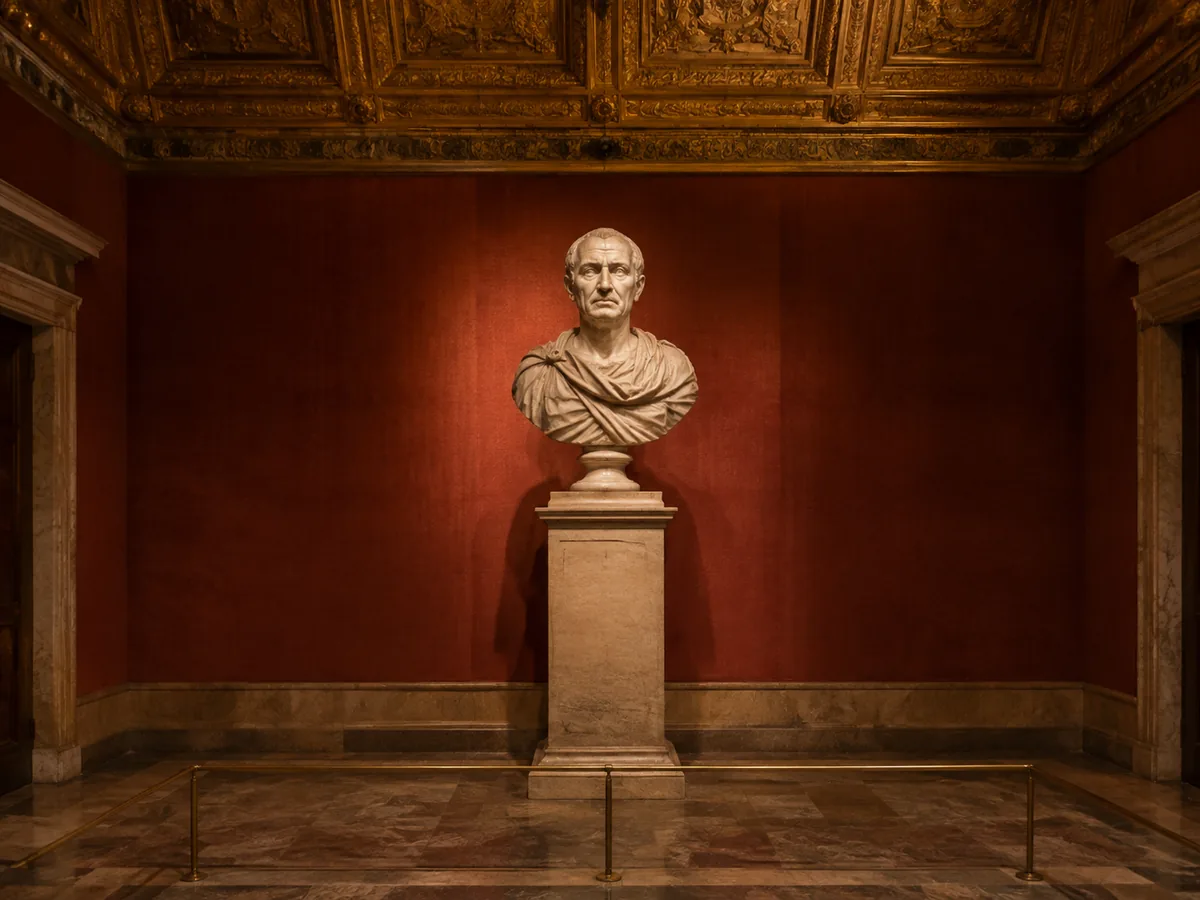
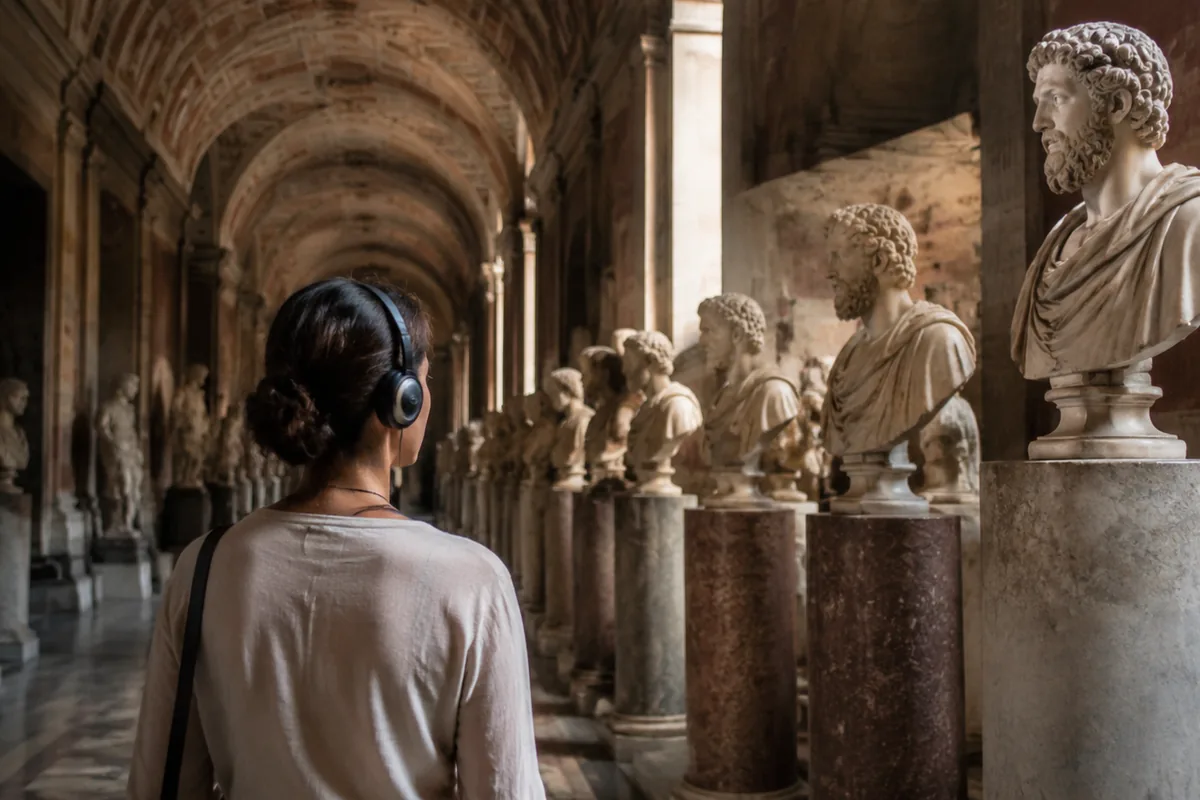
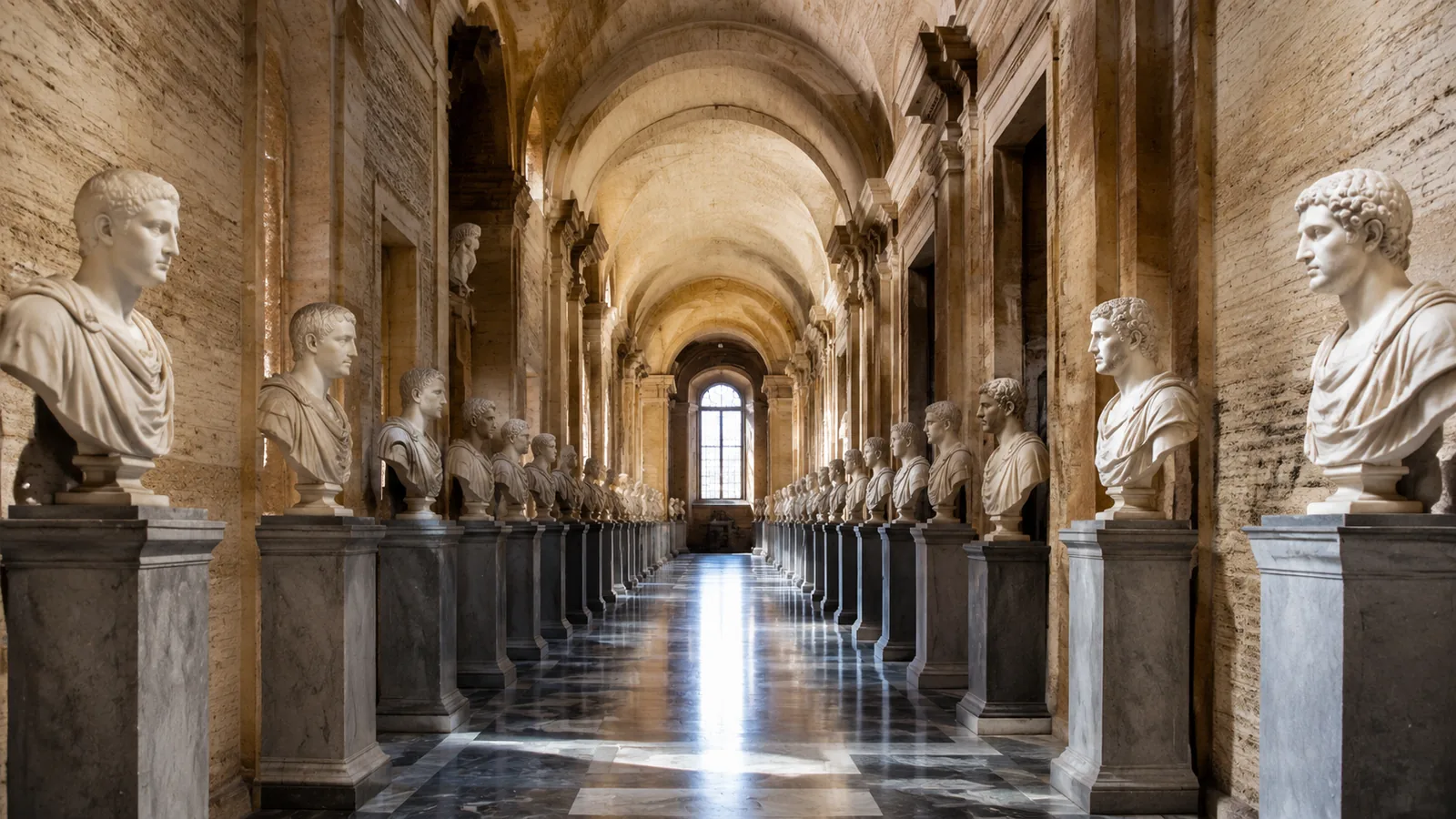
- Palazzo Nuovo — the Dying Gaul, the Capitoline Venus in her own small cabinet room, and 67 imperial busts in the Sala degli Imperatori
- The Pinacoteca Capitolina upstairs, with both Caravaggios in the Sala di Santa Petronilla — the works worth crossing the hill for
- The Galleria Lapidaria under the square and the Tabularium arcade above the Forum — how the buildings join up
- A cloakroom, which you will need: bulky bags, backpacks and umbrellas are not allowed through the galleries
Outside the ticket
- Palazzo Senatorio, the third palace on the square. That is City Hall, and it is visited only on separate free guided tours booked by phone
- Temporary exhibitions, which can carry a supplement on top of the museum ticket, payable online or at the desk
- Centrale Montemartini, the power-station annexe on Via Ostiense — a combined ticket exists and it is valid for seven days
- The Roman Forum itself. You look along it from the Tabularium; walking in it is a different, state-run ticket — and a different hill
- Audioguides and videoguides, sold separately at the ticket desk
What the operator products add
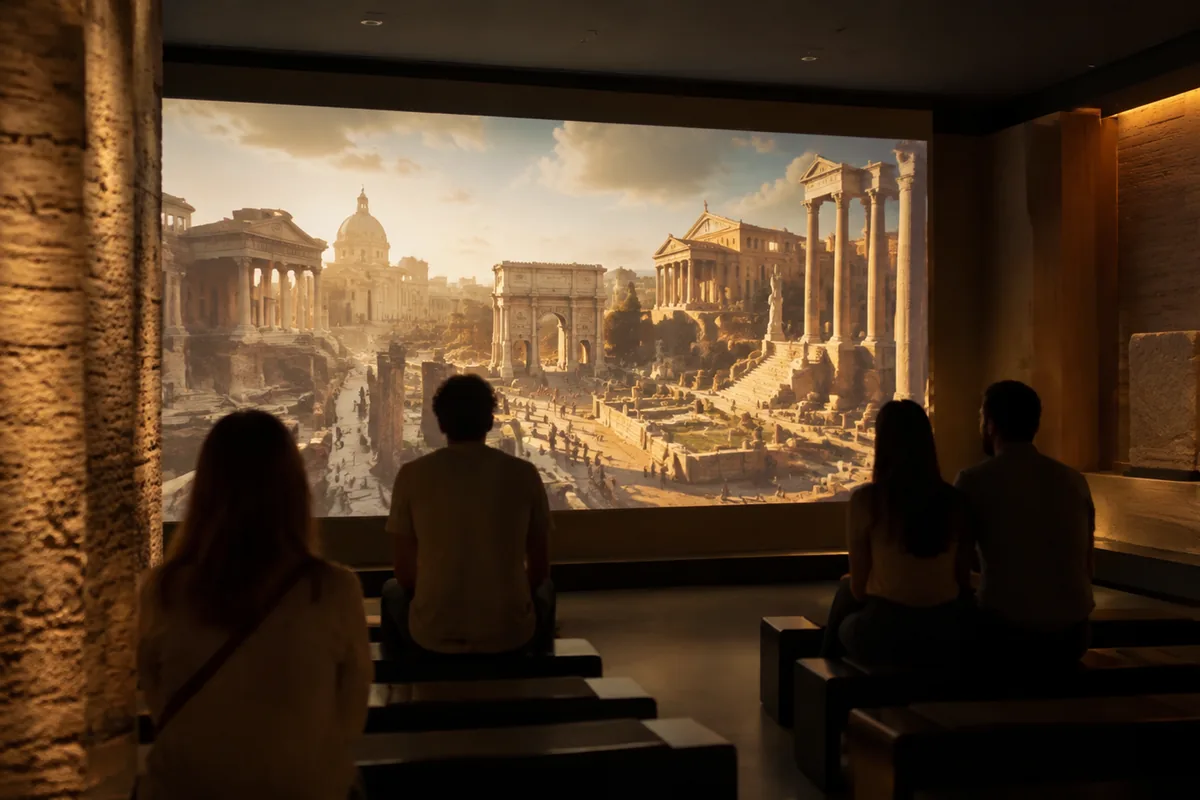
- A reserved entry slot, plus a 25-minute briefing film on ancient Rome watched before you walk up the hill
- An audioguide handed to you or an app on your phone, rather than something you queue for at the desk once you are already inside
- A guide who knows which Caravaggio is which — the guided options and the private ones
- Free cancellation up to 24 hours before, which the museum’s own advance ticket does not offer — the real argument for booking
- Add-ons chosen at booking: Centrale Montemartini, a guided tour, or a hop-on hop-off bus ticket
The museum in order, from the Cordonata to the terrace
Where to walk, in the sequence the building actually wants you to walk it.
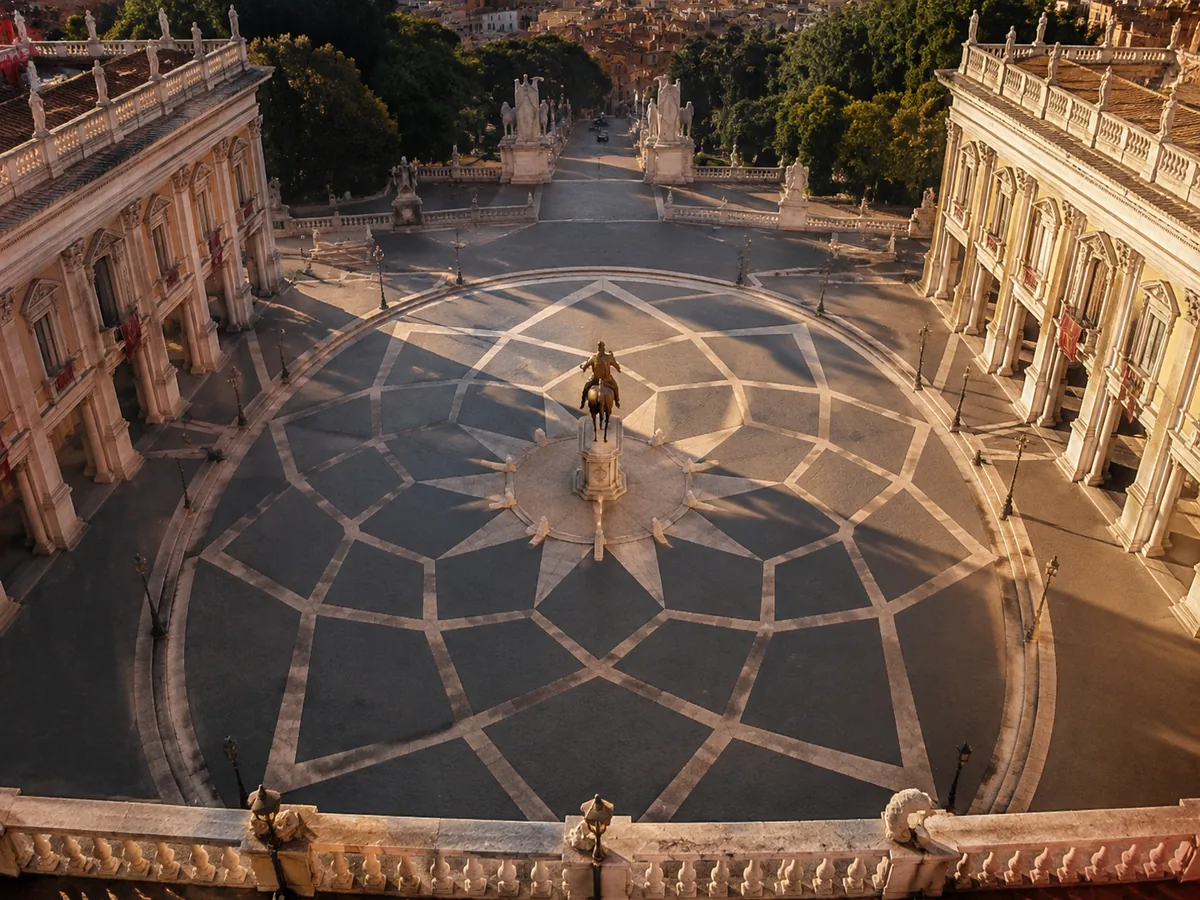
You come up the Cordonata, Michelangelo’s ramped stair, built with steps shallow enough to ride a horse up. The steep flight immediately to its left is the Aracoeli staircase, 124 steps of ancient marble, and it goes to the church rather than the museum. At the top, the equestrian statue in the middle of the square is a bronze replica put there in 1997. Getting up here takes about five minutes from Piazza Venezia.
- Palazzo dei Conservatori — the way in — The palace on your right as you face the square from the top of the ramp. Ticket desk and cloakroom inside, staffed in Italian and English. This is the only entrance; everything else on this list is reached from here without going back outdoors.
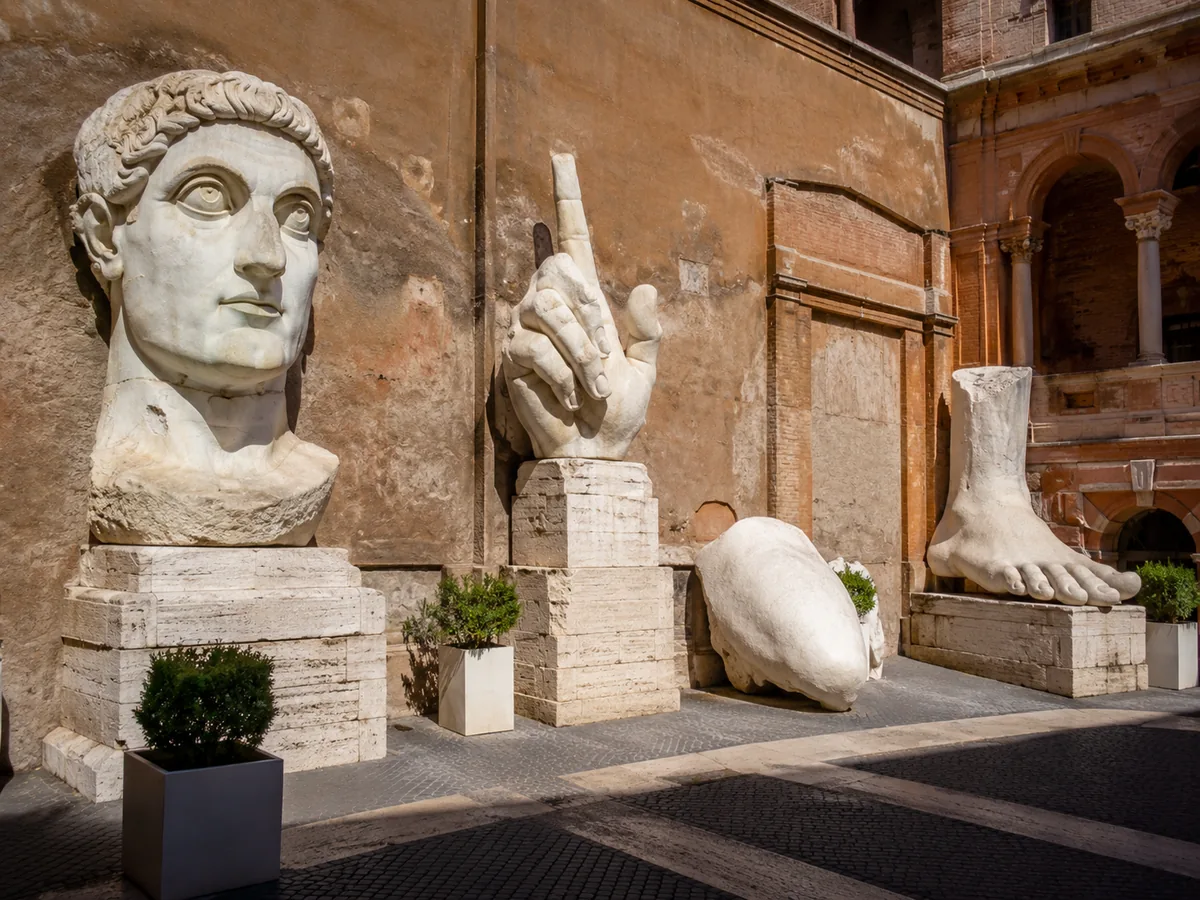
- The courtyard, and Constantine in pieces — The head, the arm and the right hand of a colossal marble Constantine, recovered from the Basilica of Maxentius in 1486. The hand is 166 cm on its own, and the raised index finger everyone photographs is a modern restoration of an ancient fragment.
- Sala della Lupa — The Capitoline She-Wolf, 75 cm high, on the wall of a room that was an open loggia in the 1500s. The label says 5th century BC; radiocarbon work at the University of Salento put the bronze between AD 1021 and 1153. The twins beneath her are a 15th-century addition and nobody disputes that.
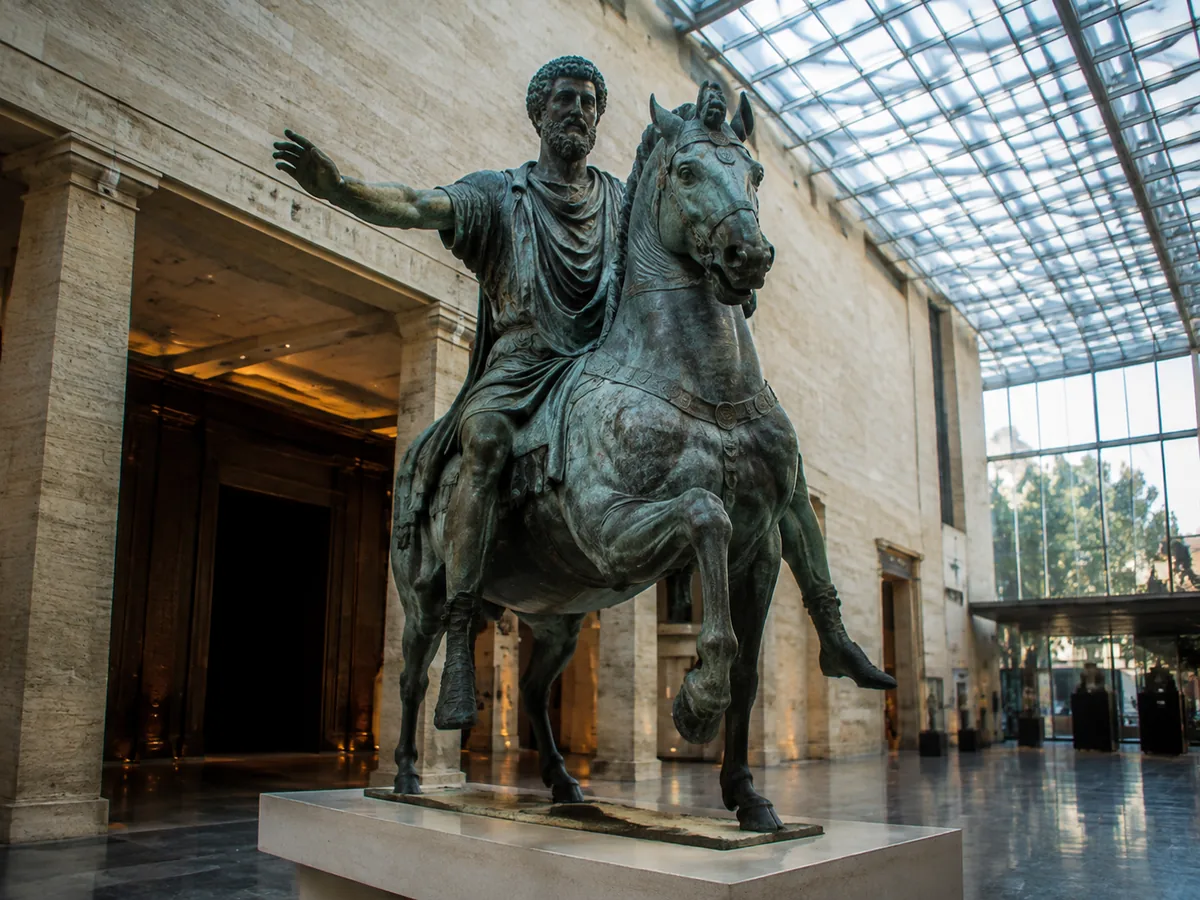
- Esedra di Marco Aurelio — A glazed hall built into the old Roman Garden and opened in 2005. The original Marcus Aurelius stands here, 424 cm of gilded bronze, indoors since 1990. Beside it, the gilded Hercules from the Forum Boarium and the foundations of the Temple of Jupiter Capitolinus.
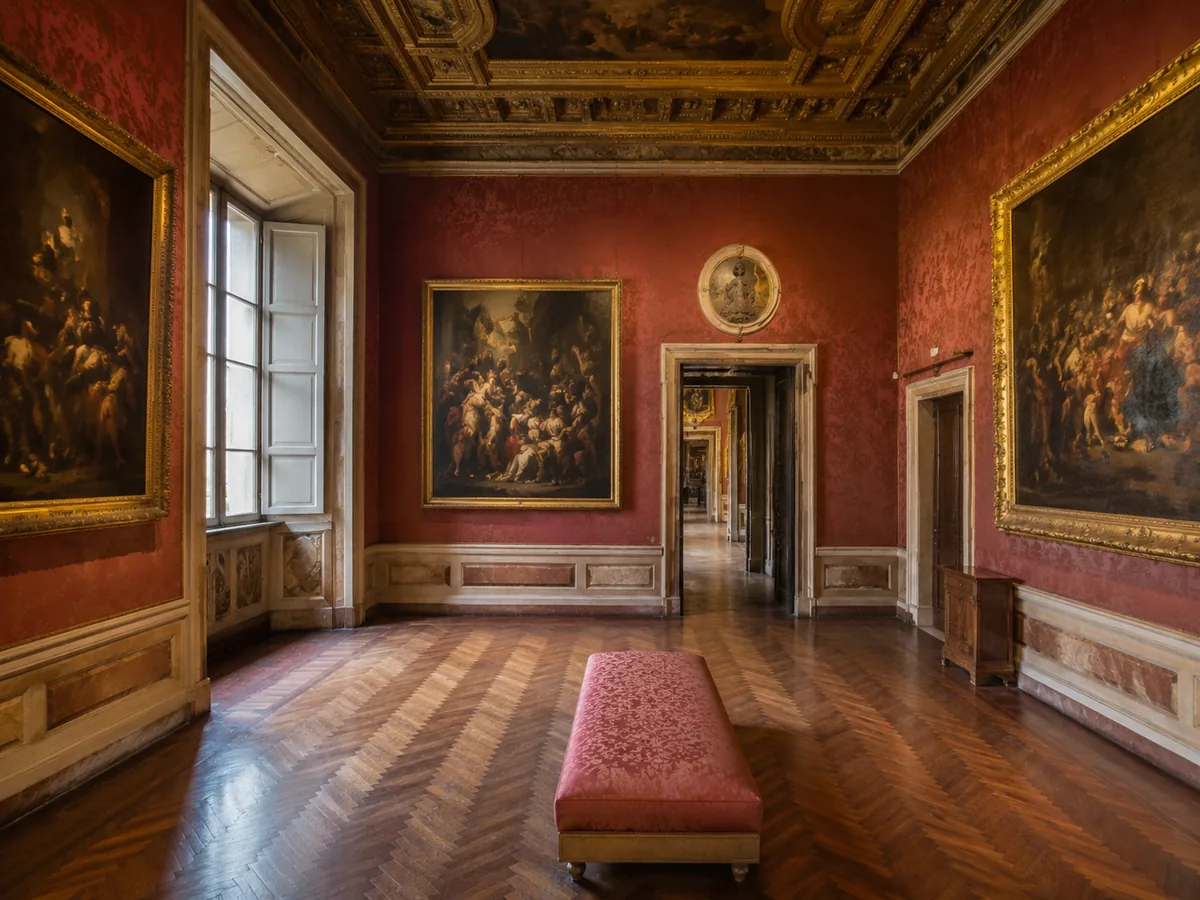
- The state rooms and the Pinacoteca — Through the Appartamento dei Conservatori — nine frescoed rooms, including the Sala degli Orazi e Curiazi, where the Treaty of Rome was signed on 25 March 1957, a fact the room’s own label does not mention. Upstairs, the picture gallery: two Caravaggios, Guercino’s vast Santa Petronilla altarpiece, Rubens, Titian, Veronese.
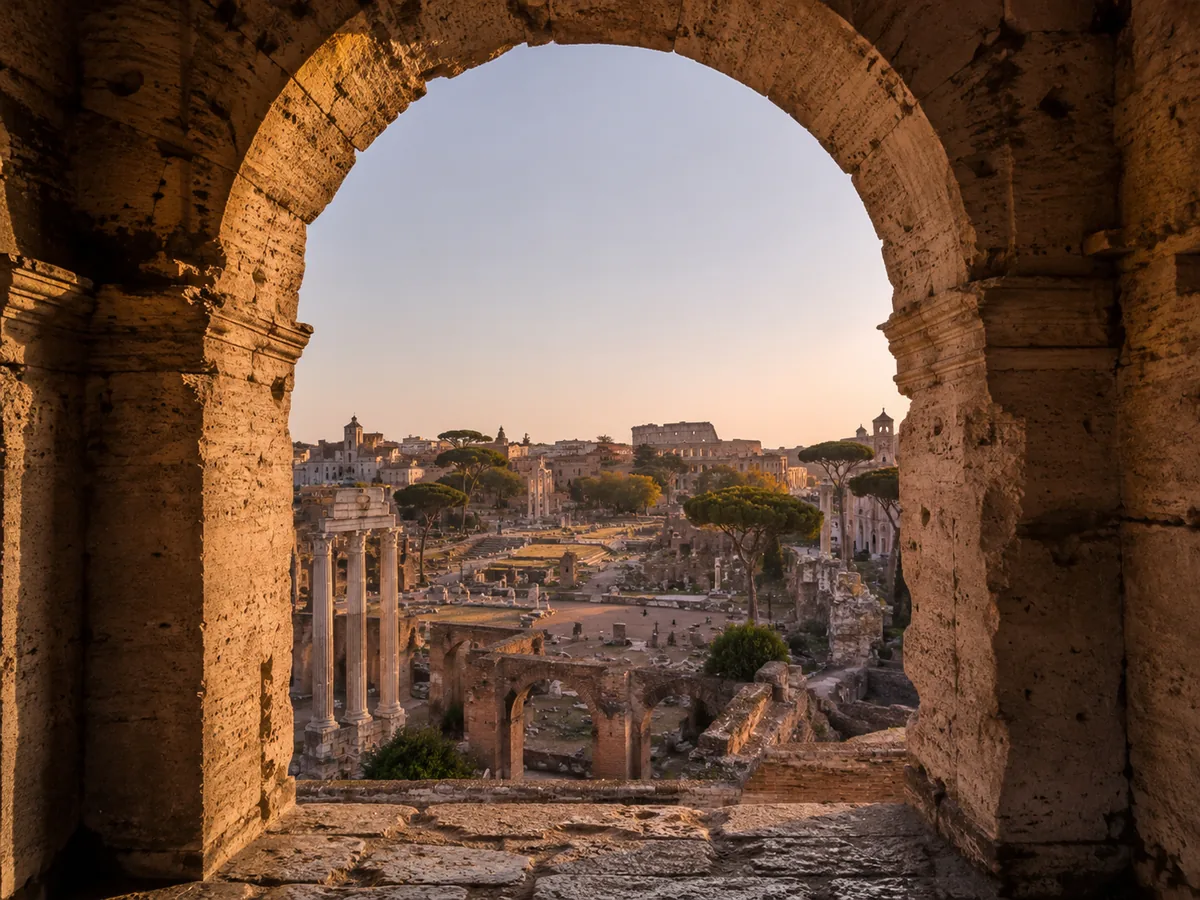
- Galleria Lapidaria and the Tabularium — Down under Piazza del Campidoglio, through roughly 1,400 ancient inscriptions arranged by theme, then into the foundation chambers of the Tabularium, the Roman state archive finished in 78 BC. It ends in an arcade of 11 bays looking straight along the Forum. This is the best thing on the ticket and nobody puts it on a poster.
- Palazzo Nuovo — You surface in the other palace without having crossed the square. The Dying Gaul in the Sala del Gladiatore, positioned with his back to the stairs; the Capitoline Venus alone in her cabinet; Marforio the river god sprawled in the courtyard under the 1734 inscription that records the museum’s opening.
- Terrazza Caffarelli — The café and terrace on the top floor of Palazzo Caffarelli, open daily 09:30–19:00 with last entry at 18:30. It has its own external entrance from the Capitoline steps, so you can sit on that view without a museum ticket at all — the free half of the hill.
Two to three hours covers all of that at a reasonable pace. An hour to an hour and a half is enough if you want the bronzes, the Esedra and the Tabularium view and are willing to walk past the rest — how long you really need. Individual rooms close for maintenance for months at a time, so check the museum’s notices page before you build a morning around one object.
How booking works
Decide whether you want a ticket or a day
A plain entry with an audioguide asks about 90 minutes of you. A private guide asks two and a half hours and collects you from your hotel. The bus combo is two days of validity. Those are different products with the same museum inside them — all six, side by side.
Check the date, not the tour
Availability moves week to week and the private guides run thinner than the ticket products. The panel below pulls live dates straight from GetYourGuide.
Hold it, then think about it
Everything listed here cancels free up to 24 hours before. The museum’s own advance ticket does not: once bought it cannot be refunded or moved, which is the single most useful thing to know before you buy anything.
Know where you are actually meeting
The three products start in three different places — the operator’s office on Piazza d’Aracoeli, the Marcus Aurelius statue up in the square, or the ticket office at Piazza del Campidoglio 1. Reviewers who had a bad morning almost always had a meeting-point problem, not a museum problem.
Live dates for the multimedia ticket
The product most people book: check in at the operator’s office on Piazza d’Aracoeli, watch a 25-minute film on ancient Rome, then walk up to a reserved entry slot with the audioguide app running. Rated 4.3 across 1,423 reviews, which is the only four-figure review count in the whole Capitoline catalogue. Dates come straight from GetYourGuide.
Ticket, ticket-plus, or a guide of your own?
The three products that cover the real range of choice here. Everything below is time, format and what sits inside the booking.
| Rome: Capitoline Museums Experience Visit with Audioguide | Most bookedRome: Capitoline Museums Experience with Multimedia Video | Rome: Private Capitoline Museums Tour | |
|---|---|---|---|
| What it is | Official entry plus a multi-language audioguide | Reserved entry slot, a 25-minute briefing film and the audioguide app | A private guide for the museum, tickets included |
| Time it asks of you | 1.5 hours | 3–5 hours | 2.5 hours |
| Where you start | Piazza dell’Aracoeli — look for staff in green jackets | The operator’s office on Piazza d’Aracoeli | At the Marcus Aurelius statue in the square; the guide holds a sign |
| Languages | Nine, including Japanese, Turkish and Polish | English, French, Italian, Spanish | English and Italian |
| Skip the ticket line | Yes | Yes, with a reserved time slot | Not claimed on the listing — tickets are included, so don’t assume it |
| Transport | None | None as standard; a hop-on hop-off bus can be added at booking | Hotel pickup and drop-off, private transport |
| Add-ons at booking | None listed | Centrale Montemartini, a guided tour, the bus | None — the tour is the product |
| Rating | 3.9 from 42 reviews — the weakest of the six | 4.3 from 1,423 reviews — by far the largest sample here | 5.0 from 43 reviews |
| Accessibility | Not suitable for visitors with mobility impairments; large bags not allowed | Not stated on the listing | Not suitable for wheelchair users |
| Cancellation | Free up to 24 hours before | Free up to 24 hours before | Free up to 24 hours before |
| View → | Book this → | View → |
Photo Gallery
The hill, and what is on top of it
Michelangelo’s square, four bronzes, a picture gallery and the Forum view.
The six I list, and who each one is for
Two ticket products, one combo and three guided options. Full write-ups on the all-tickets page, and honest verdicts on the reviews pages.
 Most booked
Rome: Capitoline Museums Experience with Multimedia Video
 Ticket & audioguide
Rome: Capitoline Museums Experience Visit with Audioguide
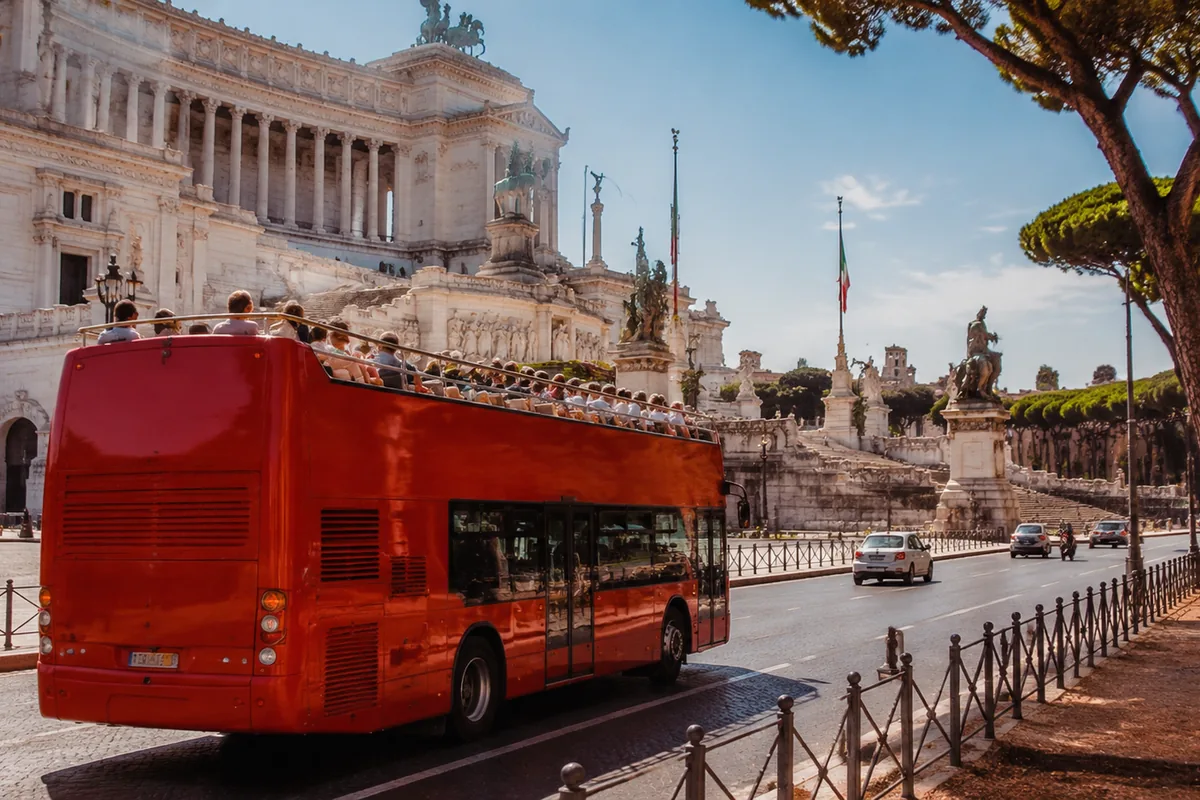 Ticket & bus
Rome: Capitoline Museums Ticket and Hop-on Hop-off Bus Tour
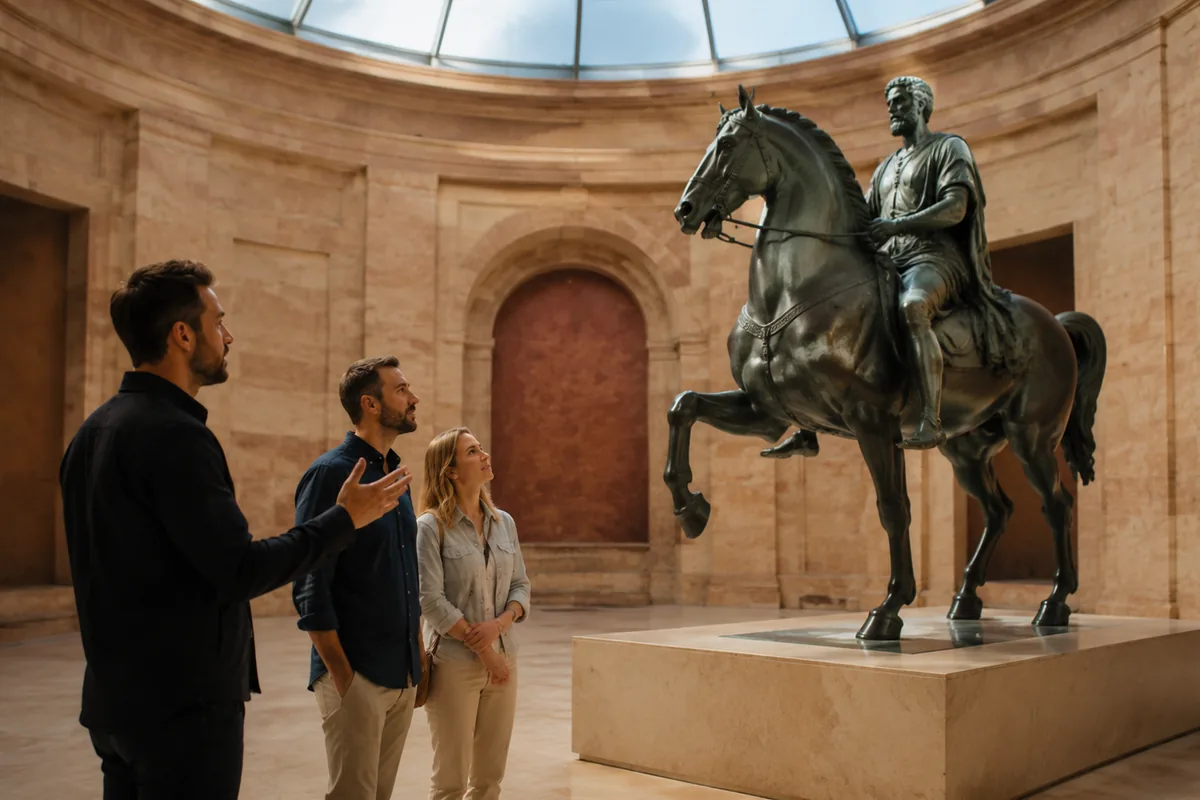 Top rated
Rome: Private Capitoline Museums Tour
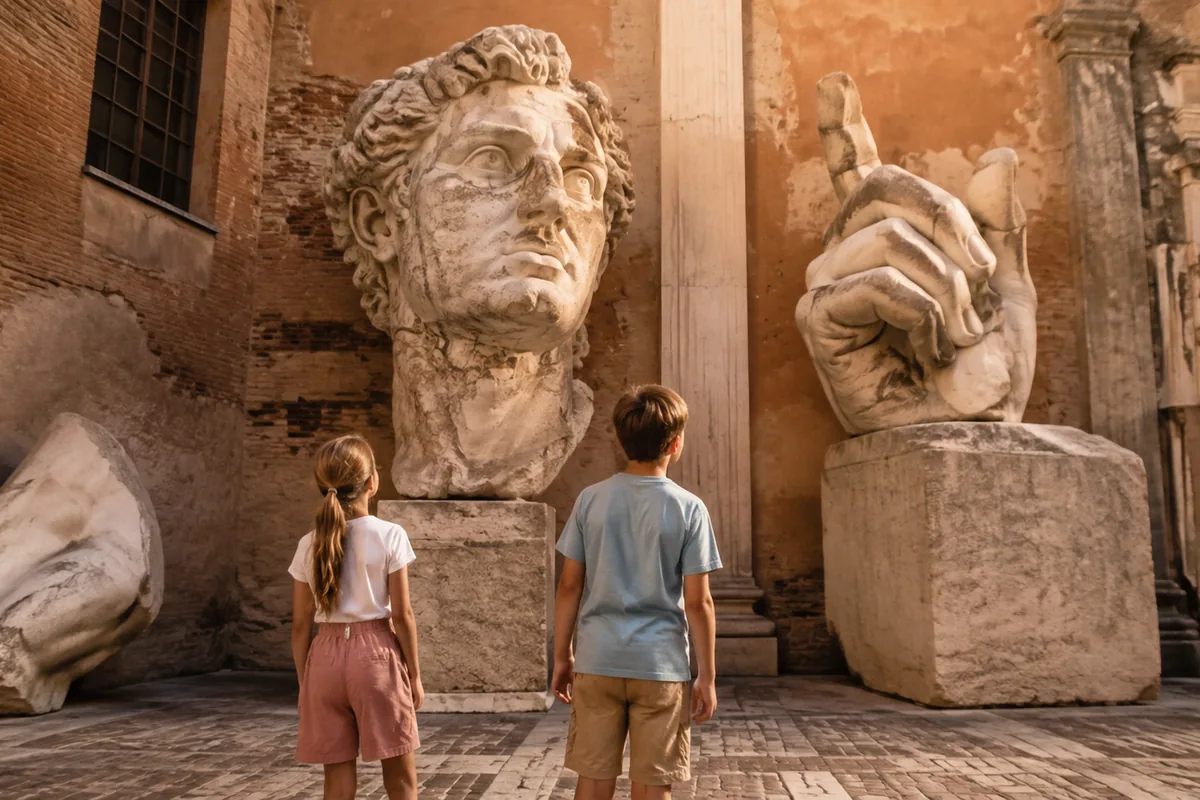 Best with kids
Rome: Private Percy Jackson Tour at Capitoline Museums
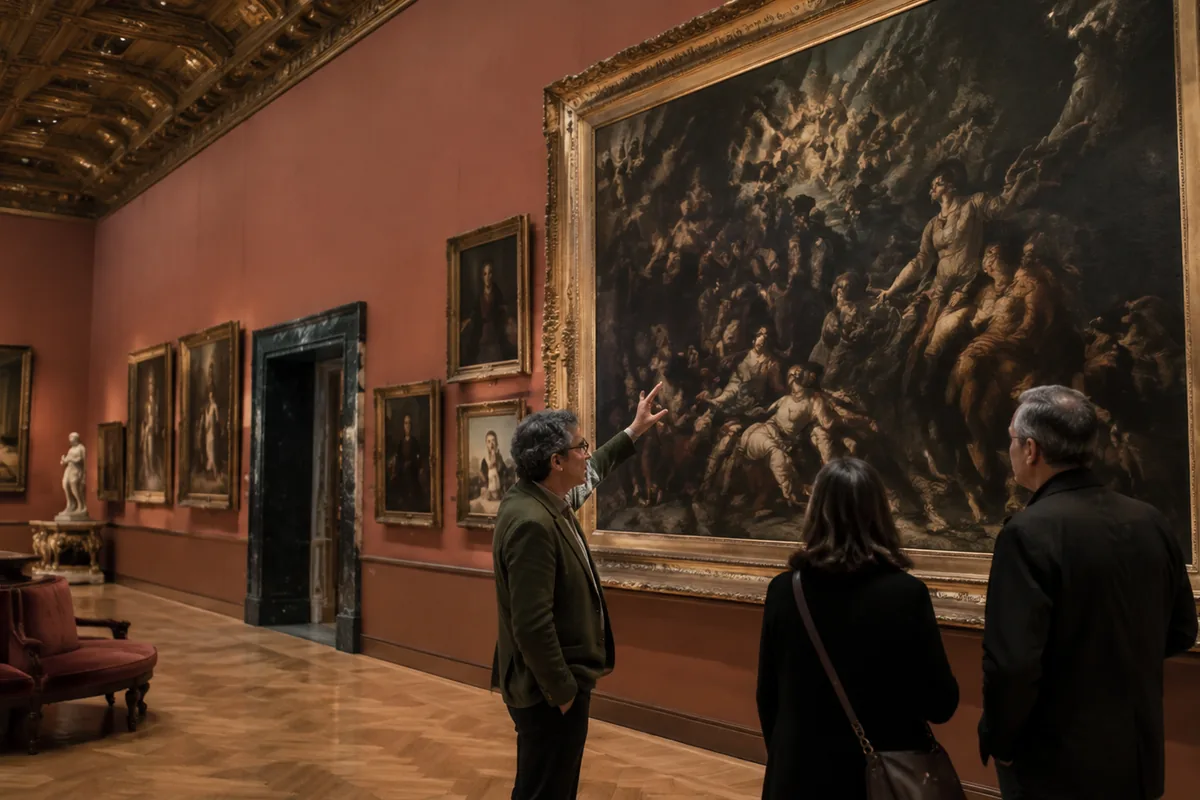 Art historian
Rome: Capitoline Museums Timeless Private Guided Tour
What people said afterwards
Six GetYourGuide reviewers, quoted as written. The less flattering ones exist too — they are on the reviews pages, where they belong.
If you want an amazing experience in Rome without the crowds this is one of the places to go.
Excellent. The video was wonderful, and I enjoyed the museum at my own pace.
Lavina was a wonderful guide. She is incredibly helpful, knowledgeable, and she always has a smile on her face.
Vincenzo, our guide was a wealth of knowledge & enthusiasm.
For our daughter, this tour was the absolute highlight of our time in Rome.
Martin is an excellent guide with thorough knowledge of the Museum. He can draw into his reservoir of historical knowledge to make interesting connections.
Ratings and reviews are the operators’ live GetYourGuide figures. Read our full tour reviews ›
Six things readers write to me about
Short answers, with the long version one click away.
Which one should I actually book?
If you want the museum and nothing else, the plain entry with an audioguide does the job in about 90 minutes. If you have never been and want the context, the multimedia ticket adds a briefing film and a held slot, and it is the one with 1,423 reviews behind it. If you are four people who would rather be told than read, a private guide works out better than four separate tickets and four separate audioguides. All three sit next to each other on the all-tickets page.
Is the horse and rider in the square the real one?
No. The original bronze came indoors in 1990 and the replica went up on its base on 19 April 1997. The real Marcus Aurelius is in the Esedra inside Palazzo dei Conservatori, which means it is behind the ticket barrier — the one genuinely good argument for buying an admission rather than just standing in the square. More in what to see.
Does the Roma Pass cover it?
Yes. The Capitoline is a civic museum, so the 48-hour Roma Pass covers your first site and the 72-hour pass your first two. Whether you should spend a slot here is another matter: the queue at the Capitoline is short and the queue at the Colosseum is not, so the pass tends to earn more somewhere else — Roma Pass and MIC card, explained.
Can I get the terrace and the view without paying?
You can. Piazza del Campidoglio is a public square, the Terrazza Caffarelli café has its own entrance from the Capitoline steps, and the full-scale reconstruction of the Colossus of Constantine in the Giardino di Villa Caffarelli is free to walk up to. What you do not get for free is anything indoors — the café, the terrace and the comforts.
Capitoline or Borghese, if there is only time for one?
Borghese, if you are choosing on paintings and sculpture as art: it is the stronger gallery and I am not going to pretend otherwise. Capitoline, if you want ancient Rome as objects and a view over the Forum, or if you cannot face the Borghese’s mandatory booked two-hour slot. The Capitoline asks nothing of your calendar — the two compared.
Is it any good in the rain?
It is one of the better wet-day options in Rome, because you cross from one palace to the other underground through the Galleria Lapidaria rather than back over the open square. Only the two courtyards and the Tabularium arcade are exposed. Bring the umbrella and expect to leave it in the cloakroom — month by month.
Can’t make these dates?
Browse more available Capitoline Museums ticket and find one that fits your schedule — all with instant confirmation and free cancellation.
The Capitoline Museums, honestly
I grew up in Rione Campitelli, the sliver of Rome that sits directly under the Capitoline hill, and I have been walking up the Cordonata since I was small enough to need a hand on it. I am not a guide, not a licensed operator and not an art historian. I simply got tired of watching people spend a morning in a queue at the Vatican while the best bronzes in the city sat ten minutes away with nobody in front of them.
The queue is short. That is the whole story
Almost everything sold about Roman museums is sold on fear: book now, sells out, beat the line. At the Capitoline that pitch is close to dishonest. The museum’s own position is that buying online is strongly recommended, not required, and walk-up tickets at the desk inside Palazzo dei Conservatori are almost always available. Set that against the Colosseum, where a timed reservation is compulsory and booking opens thirty days ahead, or the Galleria Borghese, where a booked slot is mandatory for every category of ticket including free entry for under-18s. The Capitoline asks nothing of your calendar. It opens every day of the year from 09:30 to 19:30, last admission 18:30, and closes on precisely two dates: 1 May and 25 December. It is open on Mondays, when a good deal of Rome is not, and on Sundays, when the Vatican Museums are shut. It is open on 1 January, from 11:00 to 20:00, whatever your guidebook prints — that correction alone is worth the opening-hours page.
So what does booking ahead actually buy?
Three things, and none of them is a place in a queue that does not exist. The first is a held slot: advance purchase is online-only, and the desk sells for today, not for Thursday. The second is whatever the operator has wrapped around the entry — a twenty-five minute film on ancient Rome before you climb the hill, an audioguide already on your phone instead of one you queue for once you are inside, a guide who can tell you which Caravaggio is which, or a bus ticket bolted on at checkout. The third is the one that actually decides it for most people: every option I list cancels free up to 24 hours before. The museum’s own pre-purchased ticket does not. It is non-refundable and non-modifiable, so a flight delay or a change of plan simply costs you the ticket. Book a week ahead for a city you have not reached yet and that matters far more than any queue would. The longer argument is on whether you need to book, and what “skip the line” is really selling you here is on the skip-the-line page.
What you are buying a ticket to
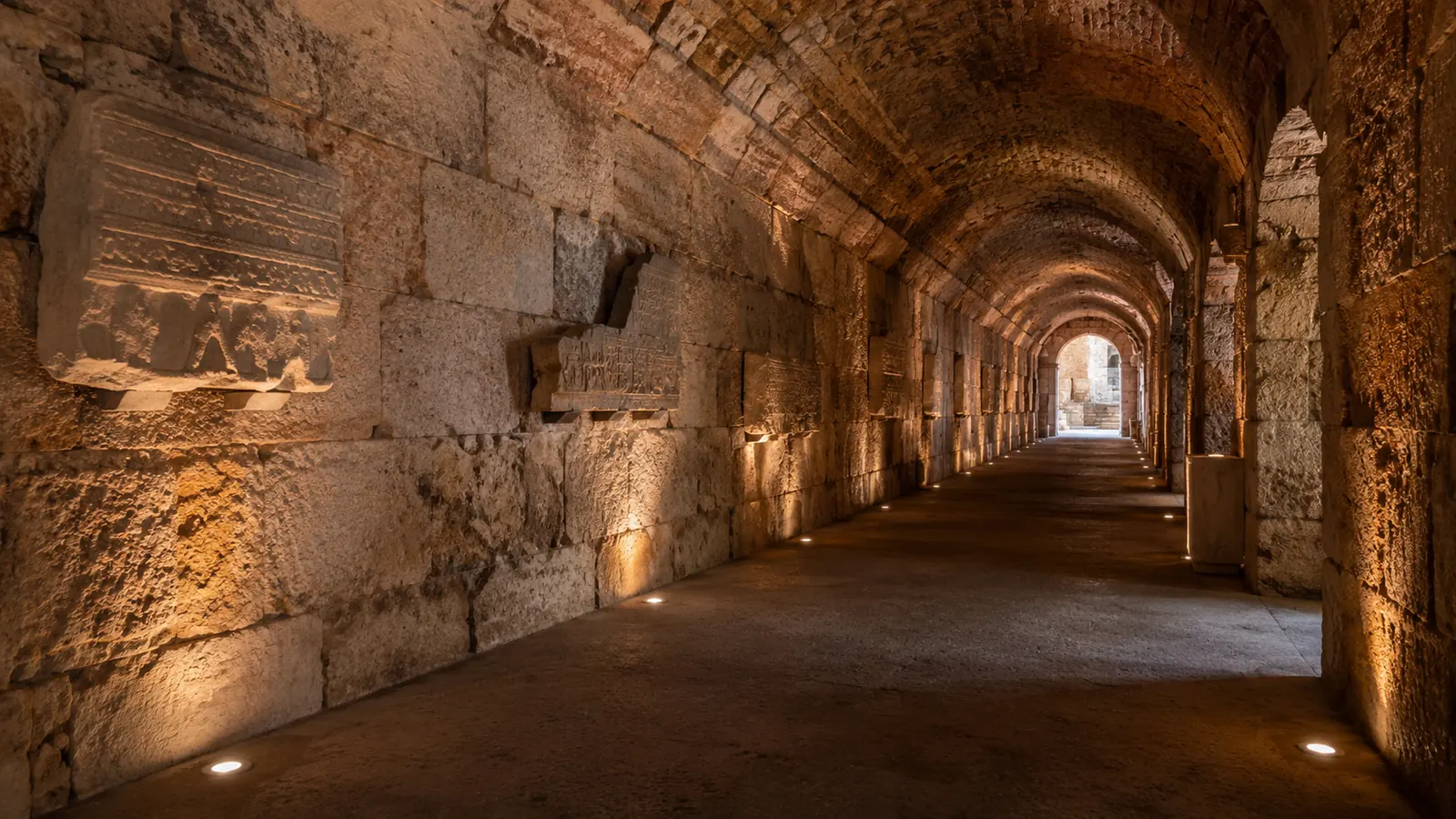
People arrive expecting one building. It is three. You enter through Palazzo dei Conservatori on the right-hand side of the square, and somewhere in the middle of the visit you go down under Piazza del Campidoglio through the Galleria Lapidaria, past roughly 1,400 ancient inscriptions, into the foundation chambers of the Tabularium — the Roman state archive, finished in 78 BC — and come out in an arcade of eleven bays looking straight along the Roman Forum. Then you surface inside Palazzo Nuovo without ever having crossed the square in the open. One admission covers all of it, plus the Palazzo Caffarelli-Clementino rooms. Palazzo Senatorio, the third palace on the square, is not in the museum: it is City Hall. The layout page lays that out properly, because the underground crossing is the part nobody tells you about and the part everyone remembers.
What is in it, briefly. The bronzes Sixtus IV gave back to the Roman people in 1471 — the She-Wolf, the Spinario, the Camillo, the Constantine fragments. The original equestrian Marcus Aurelius, indoors under glass since 1990; the one in the square is a replica put up in 1997. A colossal marble hand, 166 cm of it, in the courtyard. The Dying Gaul and the Capitoline Venus in Palazzo Nuovo, two Caravaggios upstairs. And a correction I enjoy: the museum still labels the She-Wolf as 5th century BC, while radiocarbon work at the University of Salento dated the bronze between AD 1021 and 1153. Room by room, if you want the order.
What I would not pretend about
The Pinacoteca is a real picture gallery with real pictures in it, and it is still a lesser gallery than the Borghese. If paintings are the reason you came to Rome, go there and come here second — I have set the two side by side. Individual rooms here close for maintenance for months at a stretch, so do not build a morning around one object without checking the museum’s notices first. And of the six products I list, the plain entry-with-audioguide sits at 3.9, the lowest of the set. The complaints are about the meeting point and how the audio reaches you, not about the museum — worth knowing before you book rather than after. All of that is on the reviews pages, ranked rather than smoothed over.
What I would tell a friend with one morning
Come on a weekday from opening. The quiet windows are the first hour and the last two on a Wednesday; the busy ones are weekend afternoons, high summer, and the first Sunday of the month, when entry is free for everyone and the hill knows it. Give it two to three hours — the timing page has the honest version, and the crowding page the rest. There is no dress code. The cloakroom is where your backpack and umbrella are going, so pack accordingly. Finish on the Terrazza Caffarelli, which has its own entrance off the Capitoline steps and needs no ticket at all. Then pick the version of the visit you actually want from the six on offer.
Frequently asked questions
Is entry to the Capitoline Museum free?
Not generally, but a long list of people do get in free: children under 6, residents of Rome and the metropolitan area since February 2026, MIC card holders, visitors with disabilities and one companion, EU-licensed tour guides, ICOM members, and everyone on the first Sunday of the month. Free-entry days beyond that one change through the year, so the museum tells you to check its notices page rather than trust a list printed somewhere else. The full set of categories is on who gets in free.
Do you need to pre-book Capitoline Museums?
No. The museum says online purchase is strongly recommended, not required, and walk-up tickets at the desk are almost always available — this is not the Colosseum, where a timed reservation is compulsory, or the Borghese, where booking is mandatory even for free under-18 entry. What booking ahead buys you here is a held slot, whatever the operator bundles with it, and free cancellation up to 24 hours out. The museum’s own advance ticket has none of that flexibility: it is non-refundable and non-modifiable. The honest version is on do you need to book.
How much time is needed for Capitoline Museums?
Two to three hours for a proper visit, taking in both palaces, the Pinacoteca and the Tabularium. An hour to an hour and a half is enough if you go straight for the bronzes, the Esedra and the Forum view and accept that you are walking past the rest. Four hours is not excessive if you read labels. See how much time you need, and what to prioritise if you are short.
Is the Capitoline Museum multiple buildings?
Yes, and this is the thing most people find out too late. The museum occupies Palazzo dei Conservatori and Palazzo Nuovo on opposite sides of Piazza del Campidoglio, plus the Palazzo Caffarelli-Clementino wing. You enter through Palazzo dei Conservatori and cross to Palazzo Nuovo underneath the square, through the Galleria Lapidaria and the Tabularium, coming out at an arcade over the Forum. One ticket, eight itinerary sections, and you never go back outside — the layout, explained.
What days is the Capitoline Museum open?
Every day, 09:30 to 19:30, with last admission at 18:30. It closes on exactly two days a year: 1 May and 25 December. On 24 and 31 December it runs 09:30–14:00, and on 1 January it opens 11:00–20:00 — plenty of guidebooks still print “closed 1 January” and they are wrong. Calendar and exceptions on opening days and hours.
Is there a dress code for the Capitoline Museum?
There is none. The museum’s published conditions of access prohibit bulky bags, umbrellas, food and drink, smoking and pets, and say nothing whatever about clothing. The question comes from the Vatican Museums and St Peter’s, which do enforce covered shoulders and knees, and from Santa Maria in Aracoeli at the top of the stairs next door, which is a working church. More on the dress code question.
Can you buy Capitoline Museum tickets in person?
Yes. The ticket office inside Palazzo dei Conservatori is staffed and gives fare, audioguide and concession information in Italian and English, and walk-up availability is the norm rather than the exception. The one thing you cannot do at the desk is buy in advance: for an individual visitor, advance purchase is only possible online. People entitled to free entry and MIC card holders can skip that entirely and simply turn up. See what skip-the-line means here.
Is the Capitoline Museum the oldest in the world?
It calls itself the oldest public museum in the world, and Rome’s tourist board repeats the claim. The dates behind it are 1471, when Sixtus IV gave a group of ancient bronzes back to the Roman people, and 1734, when Clement XII opened the collection to the public. The usual rival is the Vatican, which dates its origin to 1506 and the purchase of the Laocoön — later than 1471, earlier than 1734, which is exactly why the argument never ends. Laid out properly on the oldest museum question.
What is the difference between the Capitoline Hill and the Palatine Hill?
They are different hills at opposite ends of the Roman Forum. The Capitoline is the small one above Piazza Venezia, 48 m above sea level, with Michelangelo’s square and these museums on top of it. The Palatine is the large one on the far side, with the imperial palaces, and it is ticketed as part of the Colosseum archaeological park — a state site on a different booking system, with a compulsory time slot. Buying one does not get you into the other: the two hills, untangled.
Are museums free on Sundays in Rome?
On the first Sunday of the month, largely yes, but it is three separate schemes rather than one rule. Rome’s civic museums, the Capitoline included, are free for everyone on the first Sunday with no booking needed for individuals; the state sites such as the Colosseum and the Forum run their own first-Sunday scheme; the Vatican is free on the last Sunday of the month, 09:00–14:00, and cannot be pre-booked. Ordinary Sundays are not free anywhere. See free entry and Capitoline or Vatican.
Is the Capitoline Museum open on Sunday?
Yes, every Sunday, on the same 09:30–19:30 schedule as the rest of the week. That matters more than it sounds: the Vatican Museums close on Sundays except the last one of the month, so Sunday in Rome is the day the Capitoline is at its most useful. It is open on Mondays too, when a good deal of the city is not — what is open in Rome on a Monday.
What to see in the Capitoline Museum in Rome?
The four bronzes from the 1471 donation — the She-Wolf, the Spinario, the Camillo and the Constantine fragments — then the original Marcus Aurelius in the Esedra, the colossal Constantine hand in the courtyard, the Dying Gaul and the Capitoline Venus in Palazzo Nuovo, and the two Caravaggios in the Pinacoteca. The one most people miss is the Tabularium arcade, which gives you the Forum from above without walking in it. Room by room in what to see.
Still have questions? Email us [email protected]