Is the Capitoline Museum one building or several?
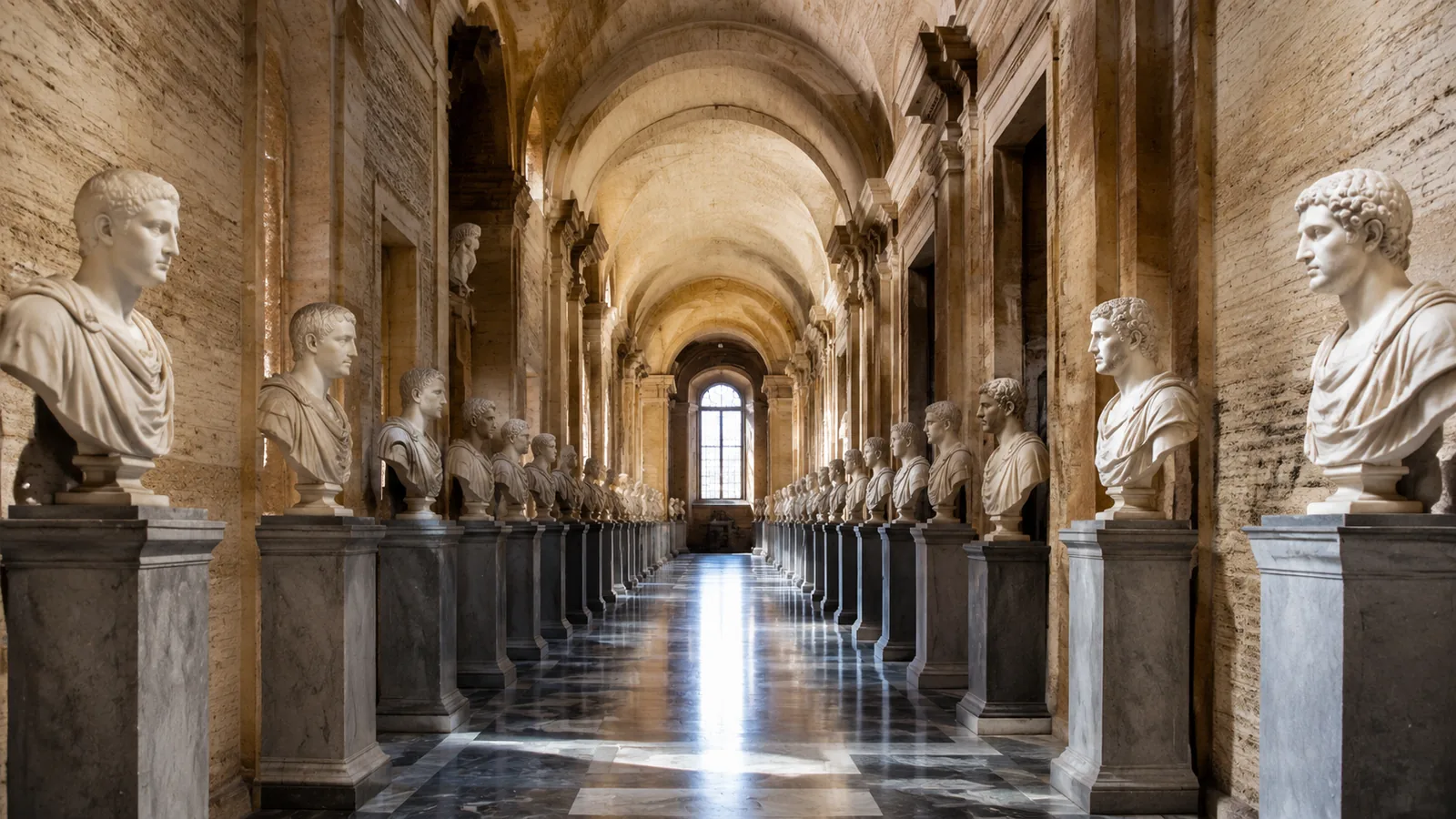
Several — and one ticket covers all of them. The museum occupies two palaces facing each other across Michelangelo’s square, Palazzo dei Conservatori and Palazzo Nuovo, plus Palazzo Caffarelli-Clementino behind them. You do not cross the square to get from one to the other. You go down, through the Galleria Lapidaria beneath the piazza, into the ancient Tabularium, and come out on an arcade looking straight down the Roman Forum. The third palace on the square, Palazzo Senatorio, is City Hall and is not part of the museum.
Know which one you want? The live dates and the operator’s own price are one tap away.
Check dates & availability →There are 3 museums, and you walk through each, but without getting back in the outside courtyard.The travelling dragon · Tripadvisor
Start with the square
Piazza del Campidoglio is trapezoidal because Michelangelo had to reconcile two existing buildings that met at roughly eighty degrees. He also did something more radical: he reversed the orientation of the hill. In the Middle Ages the Capitol faced the Roman Forum. He turned it to face St Peter’s, the symbol of the new papal city. That is why the museum appears to have its back to the Forum, and why the Forum view is a reward you reach from inside rather than a terrace you walk onto. The oval star pavement was completed in 1940, from Michelangelo’s design as preserved in engravings by Étienne Dupérac of 1569.
The three buildings, and what is in each
Palazzo dei Conservatori — where you go in
Restructured from 1563 to Michelangelo’s design, with a portico of fourteen Ionic columns. It holds the entrance, the ticket office, the courtyard with the colossal Constantine fragments, the frescoed Appartamento dei Conservatori across nine rooms, the Esedra di Marco Aurelio with the original bronze horseman, the Sale degli Horti, the Sale Castellani, the area of the Temple of Jupiter Capitolinus, and the Pinacoteca Capitolina on the upper floors. If you only had this building you would still have a proper museum. What is in each room is on what to see.
Palazzo Nuovo — the sculpture galleries
Begun in 1603 under Clement VIII, with Vignola and the Rainaldi among its architects, and inaugurated as a public museum in 1734. Thirteen spaces, essentially the classical sculpture collection: the Sala del Gladiatore with the Dying Gaul, the Gabinetto della Venere, the Sala degli Imperatori, the Sala dei Filosofi, the Salone, and a courtyard with Marforio and the 1734 founding inscription of Clement XII. That inscription is the physical birth certificate of the place — see the oldest museum page.
Palazzo Caffarelli-Clementino — the extra one
Begun in 1538 by Ascanio Caffarelli and finished after 1680; it housed the Prussian embassy from the early 19th century until the end of the First World War, when the city took it back in 1918. Today it holds the Medagliere Capitolino, with coins, medals, gems and jewellery, and the temporary exhibition halls. It also carries the Terrazza Caffarelli, which has its own external entrance from the Capitoline steps and needs no museum ticket at all — the details are on the café and comfort page.
The crossing nobody expects
This is the good bit. From Palazzo dei Conservatori you go down into the Galleria Lapidaria, an underground gallery running beneath the piazza that opened in 1957 during an international epigraphy congress with roughly 1,400 ancient inscriptions. It is arranged thematically rather than chronologically — languages, funerary ritual, law, work, games, roads and aqueducts, military life, the aristocracy, imperial dedications — and it is the section most visitors walk through too fast.
The corridor continues into the Tabularium, the seat of the Roman state archive, where laws and official acts were kept on bronze tablets, completed by Quintus Lutatius Catulus in the year of his consulship, 78 BC. You pass through its foundation chambers, with views onto the Temple of Veiovis, and arrive at a gallery of eleven arched bays in Gabine tufa looking down the Roman Forum with the Palatine and the Colosseum behind it. Then you carry on up into Palazzo Nuovo. At no point do you go back outside, which is why this is the best museum in Rome to be in when it is raining — see the best time of year to visit.
The Tabularium arcade is the museum’s quietest great view and it is on your ticket. People pay separately to walk the Forum and never realise they could have looked down the whole thing from a covered gallery first. If your legs are the limiting factor, that matters — the accessibility page covers the two stairlifts that serve this route, and a current restriction affecting Palazzo Nuovo.
The eight sections, in the museum’s own order
- Medagliere Capitolino
- Galleria Lapidaria
- Appartamento dei Conservatori — 9 rooms
- Museo del Palazzo dei Conservatori
- Pinacoteca Capitolina — 9 rooms
- Palazzo Clementino Caffarelli
- Palazzo Nuovo — 13 spaces
- Tabularium
Published figures for the total exhibition surface differ by twenty square metres between the Italian and English encyclopaedia entries, which tells you how little anyone has checked. What is certain is that it takes two to three hours to walk properly, as how long you need sets out.
The palace that is not in the museum
Palazzo Senatorio, the one straight ahead of you at the top of the Cordonata with the bell tower, is the seat of Rome’s city government. Michelangelo built its façade around 1546; Giacomo Della Porta completed it in 1605. Your museum ticket does not get you in. What does is a free guided tour on selected Sundays, at 10:00, 11:30, 15:00 and 16:30, lasting 75 minutes, capped at 30 people, with compulsory booking on the city call centre. The route starts at the historic Sixtus IV entrance, passes the archaeological remains of the Temple of Veiovis, goes through the administrative chambers and ends at the Vignola stairs. They run alongside the first-Sunday free days and they sell out — the museum’s pages for several 2026 dates are marked sold out. More on free entry.
And the annexe across town
Part of this collection is not on the hill at all. In 1997, during structural restoration, sculpture from the Museo del Palazzo dei Conservatori, the Museo Nuovo and the Braccio Nuovo was moved to a former power station on Via Ostiense, and the arrangement stuck. Centrale Montemartini is now the second venue of the Capitoline Museums, covered by the seven-day Capitolini Card, and closed on Mondays when the main site is open.
 Most booked
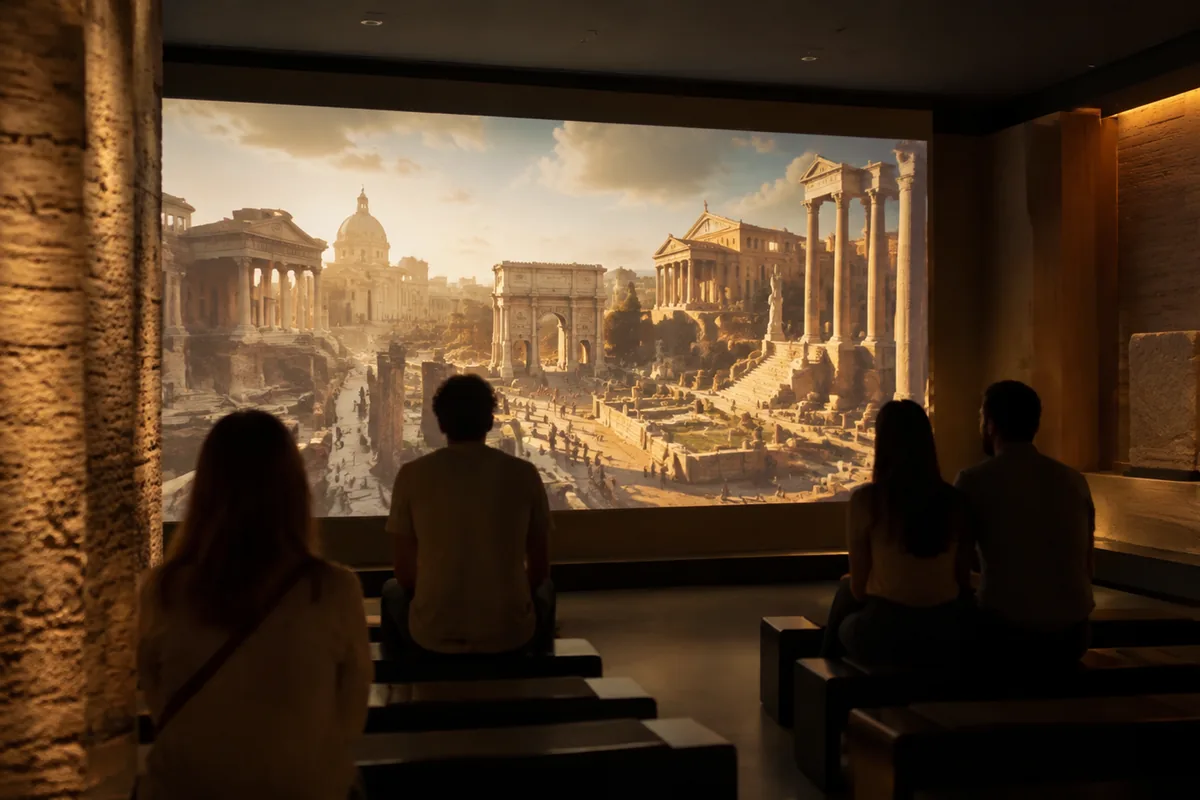
Rome: Capitoline Museums Experience with Multimedia Video
 Art historian
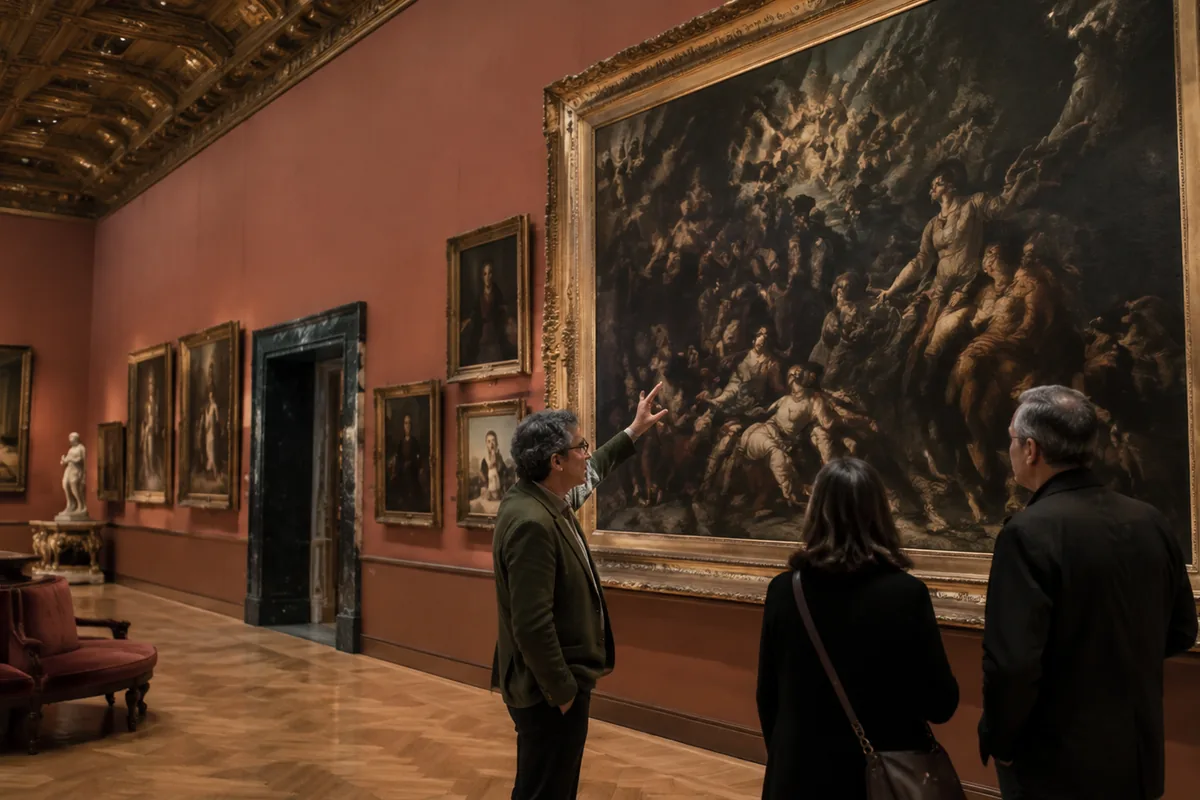
Rome: Capitoline Museums Timeless Private Guided Tour
Frequently asked questions
How many buildings are the Capitoline Museums?
Three on the ticket: Palazzo dei Conservatori, Palazzo Nuovo and Palazzo Caffarelli-Clementino, linked by the underground Galleria Lapidaria and the Tabularium. Palazzo Senatorio, the third palace on the square, is City Hall and is visited only on separate free guided tours.
Do you have to go back outside between the two palaces?
No. You cross beneath Piazza del Campidoglio through the Galleria Lapidaria, continue into the Tabularium, look down the Roman Forum from its arcade, and come up inside Palazzo Nuovo. The whole route is under cover apart from the two courtyards and the arcade itself.
Is the Roman Forum included in the Capitoline ticket?
The view is; the Forum is not. The Tabularium gallery overlooks the Forum from inside the museum, but walking in the Forum needs a separate state ticket under the Colosseum archaeological park. Capitoline Hill or Palatine Hill explains why they are different systems.
Can I visit Palazzo Senatorio?
Only on the free guided tours that run on selected Sundays at 10:00, 11:30, 15:00 and 16:30, 75 minutes, maximum 30 participants, compulsory booking through the city call centre. No museum ticket is needed and they sell out well ahead.